

Callus vs Corn: Stop Treating the Wrong Foot Problem
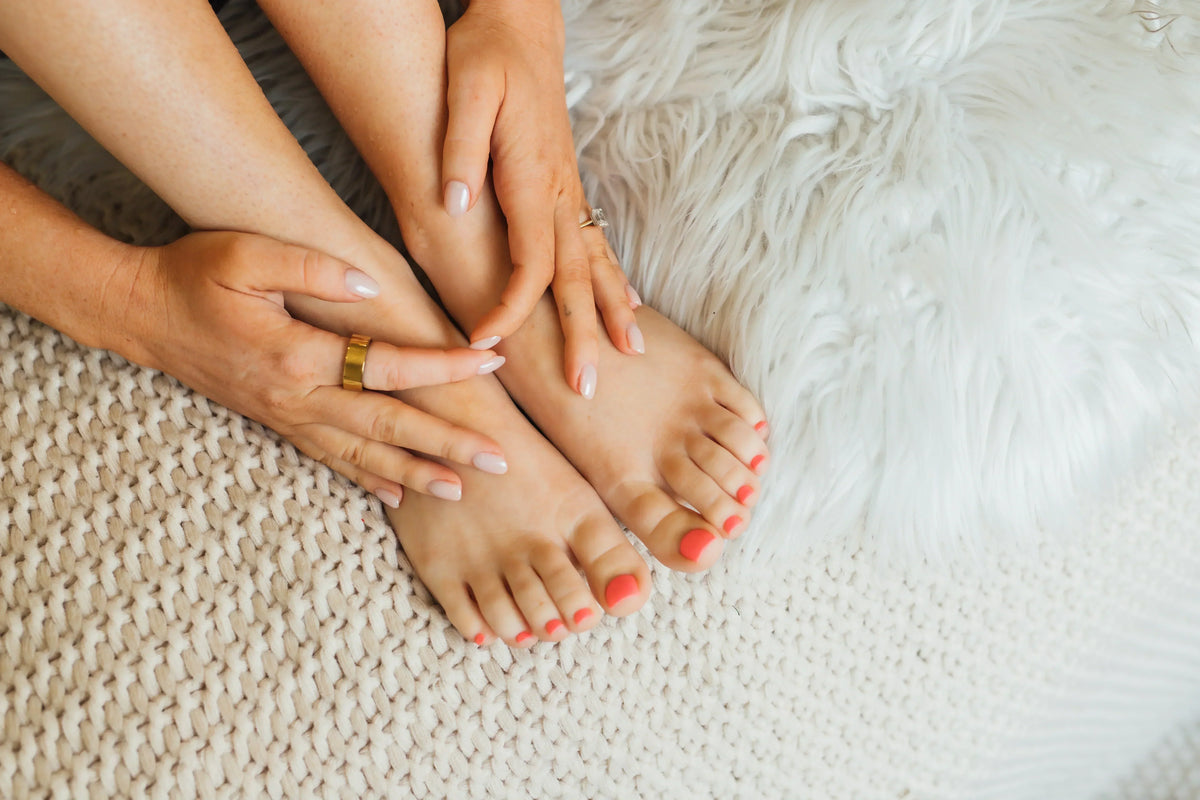
You’ve been putting cream on that hard spot near your toe, heel, or the ball of your foot for weeks. It still hurts. It still feels like you’re walking on a tiny pebble lodged under your skin that decided to stay permanently. So, you buy the same corn-and-callus product again, apply it more carefully this time, and wait.
Yet, nothing changes because you're treating the wrong issue.
Most people can't tell a callus from a corn, and that confusion is exactly why their foot problems stick around. These two conditions look similar enough to fool you, but they form differently, feel different under pressure, and need completely different responses. Getting that distinction right changes everything about what you do next.
In this blog, we explain how to tell the difference between a callus and a corn, why treating them the same way keeps foot pain going, and how to maintain calluses without ignoring corn-related pressure problems.
They're Not the Same Thing, Here's What Actually Separates Them
A callus is wide and flat. It spreads across a pressure zone, like the ball of your foot or your heel, with no clear center. The skin is thick and tough but relatively even in texture. Press on it and it feels firm, but it usually won't produce sharp, focused pain.
A corn is different. Small, dense, built around a hard central core that points inward. Press directly on one, and you'll feel it immediately. That cone-shaped core is what makes corns painful in a way that calluses typically aren't.
Location tells the story too. Calluses form on weight-bearing surfaces where pressure is broad and constant. Corns show up on the tops or sides of toes, between toes, or wherever a shoe is grinding against one concentrated spot day after day. That geography tells you exactly what's causing each one.
What Your Body Is Actually Doing When It Builds Either One
Both conditions share the same trigger: friction and pressure. But your body's response depends entirely on how that pressure is distributed.
When pressure spreads across a wide area, your skin thickens to protect the area: that's a callus. Your skin's defense system is doing its job correctly. The palms and soles are built for this kind of adaptation. No oil glands, constant friction, wired to respond to repeated stress by building protection.
Corns form when pressure concentrates on one tight spot, usually from a seam, an ill-fitting shoe, or an unusual contact point. Your skin responds by building a denser, more localized layer with a hardened core to protect the tissue underneath. The intent is the same as a callus. The result is far more problematic.
Are Calluses Actually Bad for You?

No. And this is where most foot care advice gets it completely wrong.
Calluses give you grip, durability, and protection against friction that would otherwise tear your skin. For athletes, tradespeople, and anyone who works with their body, calluses are an asset, not a flaw. Your skin is doing exactly what it was designed to do.
The problem isn't the callus; neglect is. When you never maintain the buildup, callused skin gets thicker, drier, and less flexible until it starts cracking and working against you instead of for you. That's not the callus failing. That's what happens when you ignore it long enough.
Corns sit in a different category. They're not your skin defending a broad pressure zone. They're a friction injury with a core that presses into the tissue beneath. Left unaddressed, they get more painful over time. Worth taking seriously in a way that a well-maintained callus simply isn't.
So, Why Do So Many People Treat the Wrong One?
Because generic foot care advice lumps both conditions together. "Rough, thick skin on your feet" is one problem with one solution: usually lotion or a corn remover pad from the drugstore shelf.
The lotion trap is real. Moisturizing the surface of thickened skin, whether callus or corn, doesn't address what's happening underneath. It's like pouring water on concrete and expecting it to soak through. The surface might feel temporarily softer. Nothing changes structurally.
Using a medicated corn remover on a callus creates its own problems. Those products use acids to break down tissue, and applying them to functional, callused skin damages what was doing its job. The reverse is equally useless. General callus softeners won't touch a corn's central core or the pressure source driving it. You need to know what you're dealing with before you reach for anything.


How to Actually Handle a Callus the Right Way
The sequence matters: clean first, manage buildup second, condition third. In that order, every time. Skip a step, and you're shortcutting a process that only works when you respect it.
Cleaning means actually scrubbing, not letting body wash drizzle past your ankles. Your feet have pounded sweat, dirt, and debris into your skin with every step you've taken today. That doesn't rinse off passively.
Managing buildup means exfoliation, but the goal isn't to eliminate your calluses. It's to keep them at a thickness that keeps them flexible and functional. A maintained callus is an asset. One that's never touched grows past the point of usefulness and starts splitting on you.
Conditioning is where ingredients matter. Skin with no oil glands doesn't absorb moisture the way the rest of your body does. You need something formulated to penetrate thick, oil-gland-free skin, not a general-purpose lotion designed for your forearms.
Where SandBar Salve Fits In
SandBar Salve was built for callused hands. Not general dry skin. Not as a catch-all moisturizer. For the thick, hardworking skin that shows up from lifting, climbing, gripping tools, training, building, and doing the kind of work that asks a lot from your hands.
The chapstick-sized tube makes sense because hands need something fast, clean, and easy to keep nearby. You can throw it in a bag, keep it in a gym pocket, or use it before or after a shift without digging into a jar or leaving product all over your fingers.
That mess-free format matters when you actually use your hands. The 100% organic ingredients were chosen for function on oil-gland-free skin, not for fragrance or a soft lotion feel. It is conditioning built for skin that has earned its toughness.
Where Heel Polish Fits In
Feet need something different. The skin on your heels is thicker, tougher, and harder to work product into by hand alone.
That is where SandBar Heel Polish fits in. It was built for feet, with a mess-free format and a massaging applicator that helps work the product into thick heel skin more effectively. Your hands stay clean, the applicator stores inside the tin, and the whole routine stays fast enough to actually keep up with.
How to Handle a Corn, And When to Get Help
Start with the pressure source. If a shoe creates a concentrated point of friction, no treatment will fix the corn as long as you keep wearing that shoe. Padding, better-fitting footwear, or adjusting how your shoe contacts your foot is where the real work begins.
Medicated corn removers can help, but they require caution. The acids in those products don't distinguish between damaged and healthy tissue. For active people whose skin needs to perform, using them carelessly trades one problem for another.
If a corn is deep, recurring, or causing significant pain, that's a podiatrist conversation. Some corns have structural or biomechanical causes that no topical product will resolve. Knowing when to stop treating yourself is part of treating the right problem correctly.
Treat the Right Problem Before It Gets Worse

If it is a callus, maintain it. If it is a corn, address the pressure that caused it. Guessing only keeps you stuck in the same cycle of pain, lotion, and frustration. SandBar helps keep thick, hardworking skin smooth and flexible and prevents ripping or tearing.
Start maintaining your calluses the right way with SandBar Salve for callused hands and feet.