

Dry Skin Treatment: Why Your Feet and Hands Need Different Approaches
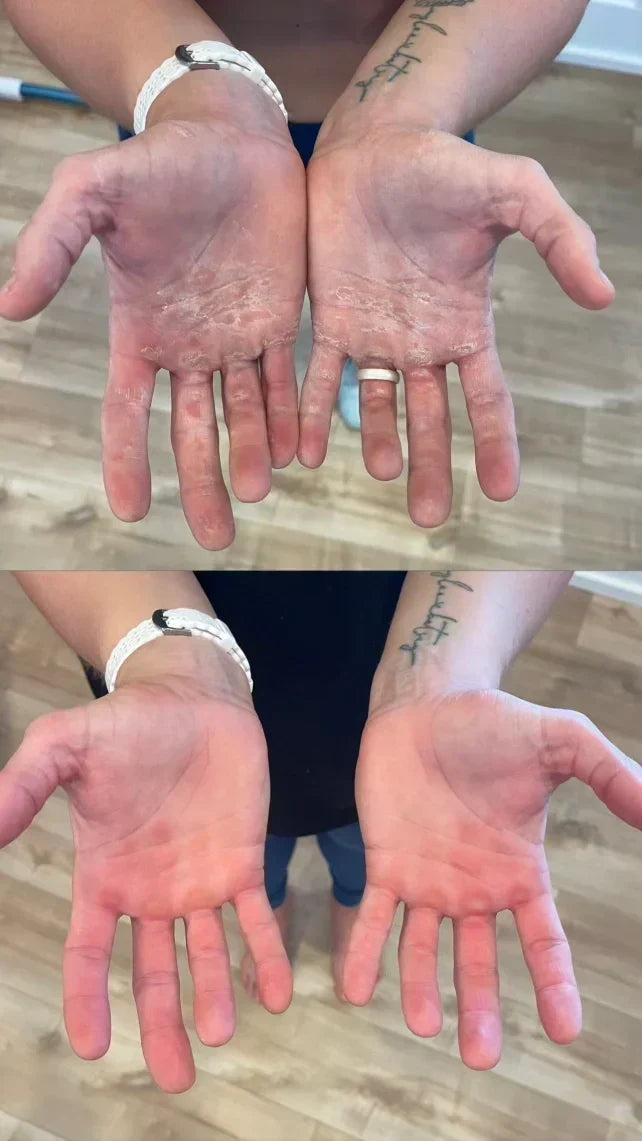
You've tried the lotion. You've tried the expensive version, the one a friend swore by, the one sitting on your nightstand as a nightly reminder. And your hands still feel like sandpaper. Your heels still crack. The maddening part isn't that it does nothing. It's that it never fully works, no matter how faithfully you apply it.
That's not a consistency problem. That's a wrong-approach problem.
The skin on your hands and feet isn't just drier. It's built differently, behaves differently, and needs a completely different strategy than the rest of your body.
In this blog, we break down why dry hands and cracked heels need more than regular lotion, how calluses affect absorption, and why the right routine starts with cleaning, buildup management, and targeted conditioning.
Your Hands and Feet Don't Have Oil Glands, and That Changes Everything
Every other part of your body has sebaceous glands, tiny structures that produce oil and keep skin naturally lubricated. Your palms and soles have zero. That means the skin on your hands and feet has no built-in system keeping it supple between applications.
Add constant friction, pressure, gripping, stepping, and daily punishment on top of that, and your skin does the only logical thing: it thickens. It builds calluses as a direct response to the stress you're putting it through. That's not rough skin as a flaw. That's your body protecting you.
The problem isn't the calluses. The problem is what happens when you ignore them.
Why Lotion Alone Is Like Trying to Hydrate Concrete
Moisturizer works by penetrating the skin's upper layers and locking in moisture. But if you've got thick, built-up dry skin sitting on top, that product can only do so much. It ends up sitting on the surface, making your skin feel better for a few minutes—but not actually changing anything.
Trying to hydrate thick, built-up dry skin is like trying to hydrate concrete. It gets the surface wet, but it never really gets where it needs to go.
That's because the thick outer layer is doing exactly what it was designed to do: protect you. The problem isn't that you have calluses. It's that excess buildup that eventually becomes a barrier.
This is exactly where traditional dry skin advice falls apart for people who actually use their bodies. The answer isn't more lotion. It's a better routine: manage the excess buildup, then give your skin the hydration it actually needs.
The Right Order: Clean, Manage Buildup, Then Condition
The sequence matters more than the products. You can have the best conditioning treatment available, but if you skip the first two steps, you're wasting it.
Step one is actually cleaning, not rinsing, and not letting body wash drip past your knees in the shower. Your hands and feet collect sweat, dirt, and debris that get pounded into the skin all day. You have to scrub it out deliberately.
Step two is managing buildup. This is where a lot of people get confused. When we say "skin exfoliator," we're talking about removing excess buildup, not scrubbing your feet with a gritty cleanser. Thick, built-up callused skin needs a file to gently remove the dry, dead layers sitting on top while leaving the healthy, protective callus underneath. Maintenance, not removal. That's the mindset.
Step three is conditioning. Now the surface is clean and managed, and your skin can actually absorb what you put on it. This is when dry skin treatment is most effective. Not before. The sequence applies to both hands and feet, though the intensity differs because each faces different demands.
What Your Feet Actually Need (Especially Your Heels)
Cracked heels aren't just a dryness problem. They're the result of ignored buildup. Your feet add protective layers every single day, and when you don't remove that buildup, the skin gets thicker, drier, and less flexible until it splits under pressure.
Foot skin thickens faster than hand skin because it carries your full body weight with every step. That means the management side of the equation needs to be more aggressive and more consistent.
Body wash isn't built for this. The skin on your feet is the hardest-working skin on your body, and it deserves a cleanser that's designed specifically for it. Your feet need a cleanser that's gentle enough for daily use but effective enough to remove sweat, dirt, and daily buildup without stripping your skin's natural protective barrier or making dryness even worse.
Once your feet are actually clean, they're ready to absorb hydration. That's when a conditioning treatment can do what it was designed to do, rather than just sit on the surface.
What Your Callused Hands Actually Need
Your hands take a different kind of beating than your feet. Every pull-up, barbell lift, kettlebell swing, rope climb, deadlift, or day spent swinging a hammer creates friction, pressure, momentum, and movement. That's exactly why your hands build calluses in the first place.
The problem isn't your calluses.
It's what happens when they get too dry.
Most hand creams are made for normal skin. Callused hands need something different. Thick, hardworking skin needs conditioning to stay healthy, pliable, and ready for whatever you throw at it next.
That's why recovery matters.
Just like your muscles recover after a workout, your callused skin needs recovery too. Applying a conditioning balm before bed gives it hours to work while your hands are resting—not while you're trying to grip a bar or swing a kettlebell.
Format matters too. If taking care of your hands is messy or inconvenient, you're probably not going to do it consistently. That's why the Salve was designed in a simple applicator you can swipe directly onto your calluses with no greasy hands, no wasted product, and no mess.
Dry, callused hands don't make you tougher. They make you more likely to tear. Keeping your calluses conditioned is far easier than dealing with a rip that sidelines your training.
The Right Tools for Hardworking Skin

Every SandBar product exists for one reason: to help the hardest-working skin on your body keep doing its job, built for the way hands and feet actually work. No fluff. No complicated routines. Just the right tools, in the right order, so your hands and feet can keep taking care of you.
Why SandBar Salve
Most people avoid conditioning their calluses because they're afraid it'll make them soft. That's one of the biggest myths in callus care. SandBar Salve isn't designed to remove your calluses; it conditions them so they stay healthy, pliable, and less likely to tear.
Made with 100% organic ingredients like shea butter, moringa oil, calendula, lavender, and tea tree, it's formulated specifically for thick, hardworking callused skin—not normal skin.
The chapstick-style applicator is intentional. It lets you apply the Salve exactly where you need it with no mess, no waste, and no greasy hands. Before bed, swipe it directly onto your calluses and take an extra minute to massage it in. Because callused skin is thicker than the rest of your body, the product needs to be worked into the skin rather than just wiped across the surface.
Your hands have been working hard for you all day. This is their chance to recover.
That's the difference between products designed for normal skin and products designed for hardworking, callused skin. SandBar wasn't created to make your hands soft; it was created to keep your calluses healthy, conditioned, and ready for whatever tomorrow throws at them.
SOLE SOAP
SOLE SOAP is a natural foot cleanser built specifically for the skin on your soles. It's the foundation step, and it's the one most people skip entirely. Proper cleansing before anything else ensures your conditioning treatment actually reaches the skin rather than layering over a day's worth of grime. Skip this and everything after it is half as effective.
Heel Polish
Heel Polish is a conditioning treatment, but the applicator is what sets it apart. The silicone massaging applicator works the product into thick heel skin rather than spreading it across the surface. That physical action is part of the treatment. You're working it in the way thick, built-up heel skin actually requires.
Conditioning without first managing buildup is largely a wasted step. Heel Polish works best as part of the full sequence, not a standalone fix.
Treat the Right Problem Before It Gets Worse

If lotion has failed you over and over, the answer is not another bottle. It is a better system. SandBar is built for the skin that takes the hit every day: callused palms, rough soles, cracked heels, and dry hands that need to stay functional, not fragile.
Clean the skin, manage the buildup, then condition it with tools made for the job. If your hands and feet are already past the point of lotion, start with the full SandBar callus care routine.