

Barefoot Hiking Foot Care: How to Protect and Strengthen Your Calluses
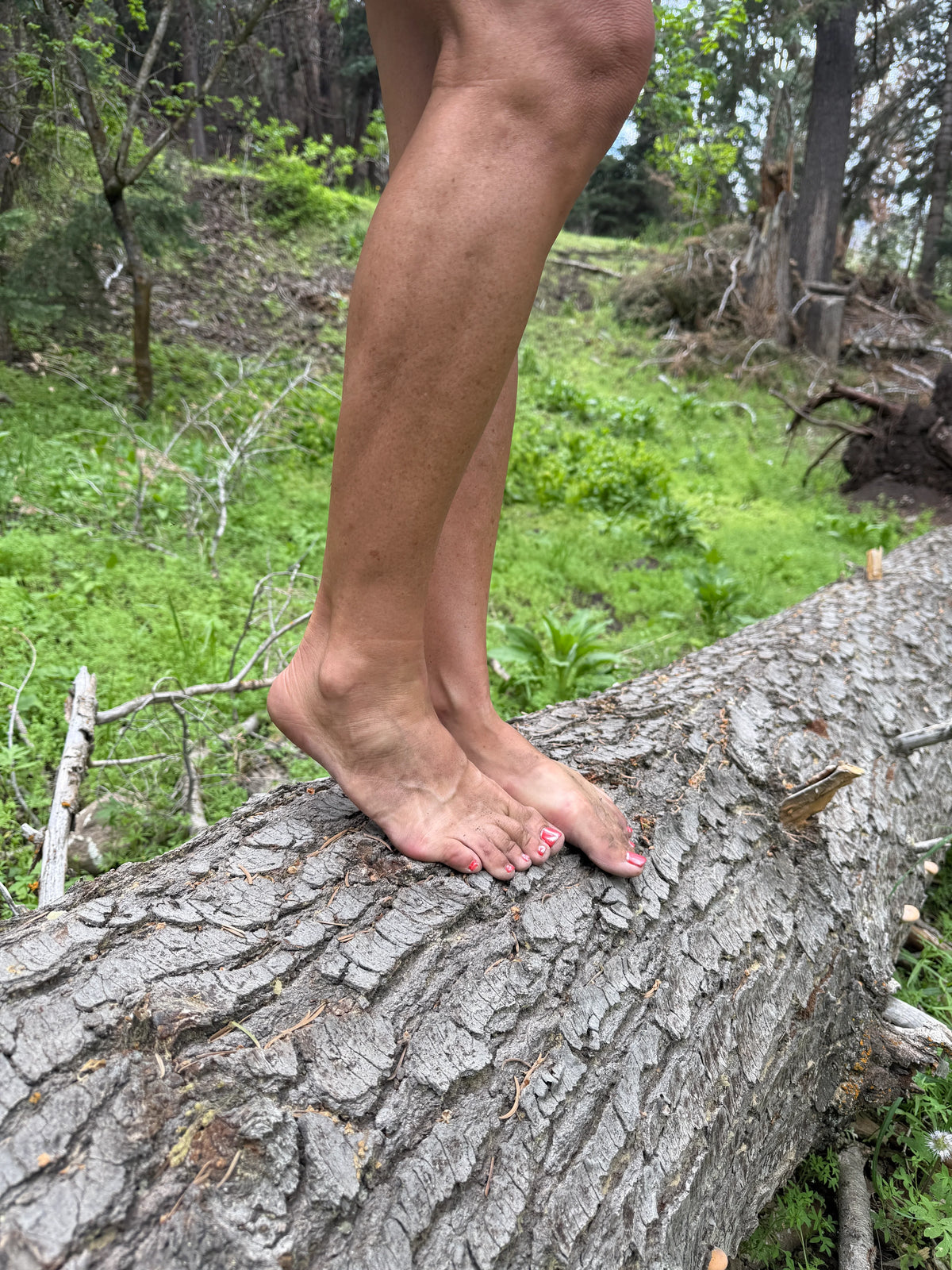
You hike barefoot because it feels right. The ground under your feet, the texture change from dirt to rock to root, the way your feet move and respond without anything between you and the trail.
Your feet aren’t just along for the ride. They do real work, and they respond by building calluses exactly where you need them: your heels, the balls of your feet, wherever the pressure lands hardest.
That’s the body protecting itself. The trail, though, pulls moisture out of that skin all day. Grit, heat, and dry air leave your calluses thick and dry instead of thick and flexible. Dry skin doesn’t flex. It cracks.
Why Barefoot Hikers Build Thicker Calluses, and Why That’s a Good Thing
Every barefoot step puts your soles in direct contact with the ground. No cushioning, no barrier. Your feet answer by thickening the skin that takes the most pressure, usually the heel.
That’s not a flaw in barefoot hiking. That’s the adaptation that makes barefoot hiking possible. Calluses let you cover miles on rock, dirt, and roots without tearing the skin underneath.
The problem isn’t the calluses. It’s leaving them unmanaged. Dry, hardened buildup can't flex, and skin that can’t flex under load eventually splits.
Don’t Fight Your Calluses. Learn How to Maintain Them.
Calluses are your body’s natural protection against pressure and friction. For barefoot hikers, they’re not optional. They’re the reason you can do this activity at all.
The goal is strong, flexible calluses, not soft skin. Soft skin blisters and tears on a trail. You want skin that keeps performing: pliable enough to flex with every step, and thick enough to handle real ground contact day after day.
Left alone, that same protective skin thickens and dries past the point of flexing. That’s when it cracks. That’s also why filing it all away doesn’t work: strip the callus completely, and you’re left with skin that isn’t ready for the ground you’re about to put it back on.
The goal isn’t less callus. It’s a callus that stays functional.
What People Try Before Finding Something That Lasts
Most barefoot hikers have tried soaking, pumice, a layer of lotion, socks overnight, maybe even a pedicure. Each one promises smooth, crack-free heels. None of them holds up past the next hike.
Soaking softens the surface, and the cracks return as it dries out again. Pumice shaves the top layer and misses the thicker buildup underneath. Lotion sits on the surface and never reaches the deeper, drier layers, actually causing the cracking.
What actually works isn’t a single treatment; it’s a short, consistent routine. A few minutes of upkeep between hikes keeps your calluses in working condition, so you’re never starting over from cracked skin.
Trail Recovery for Your Feet: Scrub, File, Moisturise

You already know your body needs recovery after a hard effort. Your feet absorb more direct impact than almost anything else on the trail, so they deserve the same attention. This routine: post-hike recovery for barefoot feet. Three steps, same order every time: scrub, file, moisturise.
Scrubbing clears the trail off your skin. Filing brings overly thick buildup back to a flexible working thickness. Moisturising keeps calluses pliable instead of hard. Done consistently, it’s less a chore and more a few minutes of winding down after a day on your feet.
Start by Scrubbing the Trail Off
Barefoot feet pick up dirt, grit, and dust directly, with nothing between your skin and the ground. Before anything else, you need to remove that, or you’ll file dirt into your skin instead of out of it.
SOLE SOAP is a cleanser built specifically for feet, which sit in sweat and trail dust in a way the rest of your skin doesn’t. Used with the Foot Scrubber Mat, it gets into the soles, heels, and between the toes without over-stripping skin that’s already working hard to stay flexible.
There’s a second benefit here for barefoot hikers specifically. Bare soles are dense with sensory nerve endings, and many barefoot hikers choose this activity for that exact feeling of ground contact and sensation. The Foot Scrubber Mat’s texture adds a stimulating, massaging sensation to the soles while you clean, something worth noticing on its own. It’s a genuinely good way to wake up and reset tired feet after a long day on the trail.
File the Thickest Buildup Back to Working Condition
Focus on the areas carrying your weight: the heel and the ball of the foot.
The Foot File has a round handle and an almond-shaped filing head designed to follow the foot's contours. That shape lets it work the areas that need it most- the heel and the ball of the foot- without flattening or overworking the surrounding callus. You’re not trying to remove the callus; you’re maintaining it at a thickness that can still flex.
Then Recover: Moisturise the Skin That Stays

Right after filing, while skin is still slightly damp, work moisture into it. Damp skin absorbs faster than dry, hardened skin.
Heel Polish is a conditioning treatment that comes with a silicone applicator, and that applicator does real work, not just keeps product off your hands. The skin on your feet is thicker and works harder than skin anywhere else on your body. The applicator lets you massage the product directly into the lines and cracks of callused skin, where a layer of lotion never reaches. It’s also fully organic, which matters for an audience that pays attention to what they put on their skin after a day outdoors.
Filing and conditioning work together: one brings buildup to a workable thickness, the other keeps that skin flexible so it holds up instead of hardening and cracking again.
Keeping Your Heels Trail-Ready All Season
One solid scrub-file-moisturise night won't carry you through a season. Barefoot feet need upkeep between hikes.
Work the routine before your heels split, not after. Wait for the crack, and you're treating an injury, not maintaining skin.
Maintained feet feel different on the trail. The thick spots stay flexible, the heel holds firm, and nothing catches or tears mid-step.
That's the payoff. Not soft feet. Feet that keep going.
Your Calluses Are Protecting You. Keep Them That Way.

Barefoot hiking isn’t the problem. Letting the skin that makes it possible dry out, thicken past flexibility, and crack is. Every trail asks something of your feet, so give them a short recovery routine that keeps up: scrub off the trail, file the buildup back to working thickness, and moisturise while it’s still damp.
This isn’t about different feet. It’s about feet that keep doing the thing you chose them for, mile after mile.
Build it into your trail routine with the Athlete Foot Regimen, the three-step system built for feet that do real work.