

Why Gymnasts Rip Their Hands on the Bars (and How to Heal Fast, Then Stop the Next One)
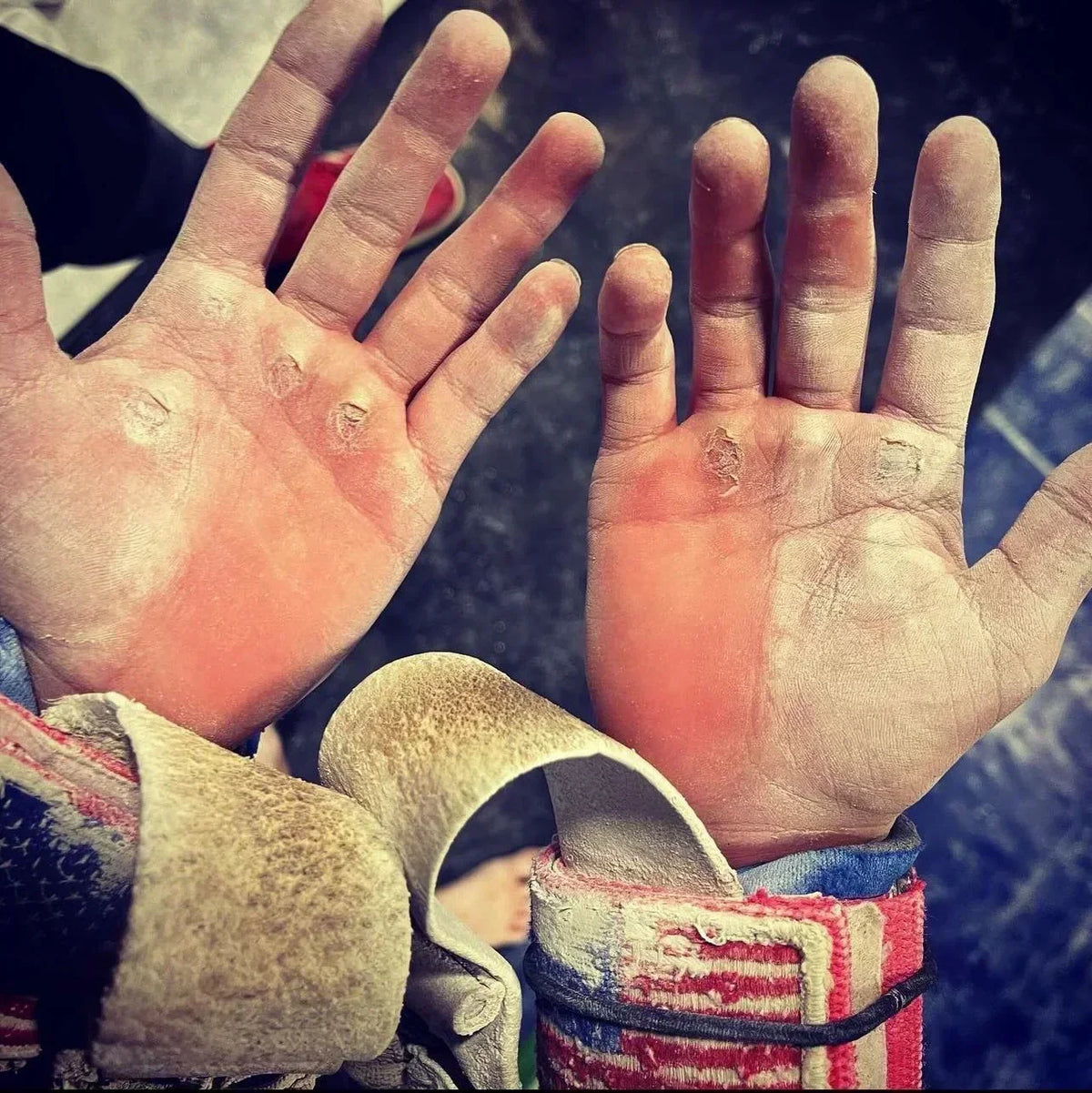
You finish your set on bars, peel off your grips, and there it is. Another rip.
It stings. Tape comes out. Practice changes for the day. And somewhere along the way, a ripped hand started getting treated like proof you trained hard enough.
It isn't.
A rip doesn't come from one weak spot the bar happened to catch. It comes from a callus that stopped sharing the load with the rest of your grip and started carrying too much of it itself. SandBar was built around that exact problem: not to remove the calluses gymnastics gave you, but to keep them doing their job instead of setting up the tear.
This blog breaks down why bar work actually causes rips, what to do the moment skin tears, and how a few seconds of maintenance after every practice keeps the next one from happening.
Why Gymnasts Actually Rip Their Hands
Calluses aren't the problem. They're one of the smartest things your hands do.
Every swing, kip, giant, and release compresses the same grip points in the same direction, thousands of times. Your body responds by thickening the skin there for protection.
The problem starts when that thickened area stops moving with the rest of your grip. Instead of the load spreading evenly across your palm, the thick callus starts carrying more of it than it should. Eventually, it's not the callus that tears. It's the healthy skin around it, the skin that was never built to absorb that much force on its own.
Calluses aren't the problem. Neglected calluses are.
Calluses Protect Gymnasts Until They Get Too Thick


A maintained callus stays pliable enough to move with your grip and share the load like it's supposed to. Let one area get too thick and rigid, and it starts absorbing force the surrounding skin was never meant to handle.
That's the SandBar position in one sentence: maintenance, not removal.
You're not trying to sand your hands flat or erase the calluses gymnastics gave you. You're keeping them functional enough to keep sharing the work instead of taking it all on alone.
Strong hands don't need to be thick and jagged. They need calluses that still move.
They need functional calluses without the snag.
If You Rip
Rinse the area with water to clear away chalk and debris.
If there's a loose flap of skin, trim it, and only the loose part. Cuticle nippers give a cleaner edge than curved fingernail clippers. If it hurts while you're trimming, you've gone too far.
Apply SandBar Salve directly to the rip. It won't sting, and it helps keep the area conditioned and protected while it closes.
Keep the Salve on and keep reapplying throughout the day. That's why it's built in a chapstick-style tube: it goes in your gym bag or pocket so it's there when you need it.
If the wound is deep, increasingly painful, red, swollen, warm, or draining, that's beyond what care alone should handle. Get it looked at.
Taping Helps You Finish Practice. It Doesn't Heal Anything.
Tape can get you through a set. It can't do the healing.
Covering a rip without conditioning it just delays the same problem. The skin underneath still has to close, and it closes better protected and conditioned than dry and taped over.
If you need tape to finish a routine, use it, but keep Salve as the actual recovery step underneath, not an afterthought once the tape comes off.
There's no single timeline for every rip. Depth, location, and the amount of load you put back on it all matter. When you need to modify practice, that's a conversation with your coach or trainer, not a guess.


Why SandBar Is Round, Not Flat

Once the skin has closed, maintenance starts again, and this is where the tool's shape actually matters.
Your calluses didn't form with your hand flat on a table. They formed wrapped around a bar, compressed in one direction, over and over. A flat file only works on the surface. It doesn't address how the callus actually built up.
SandBar is cylindrical, so you can grip it the same way you grip the bar. As you roll it through your hand, you're working against the same direction of compression, feathering away excess buildup while keeping the underlying callus intact and pliable.
You're not filing a callus flat. You're maintaining a callus that still moves with your grip instead of against it.
Where SandBar Salve Fits
Filing helps shape the callus. Salve keeps it pliable.
It's made for hardworking hand skin, not ordinary dry skin: 100% organic shea butter, moringa oil, calendula, lavender, and tea tree.
Use it on a fresh rip to keep the area conditioned as it closes, and on intact calluses after filing, especially at night when your hands are finally off duty.
Flexible protection beats brittle buildup, whether the skin is healing or holding.
The 10-Second Habit
Once your skin is closed, maintenance is simple: check your calluses, file down any buildup that's gotten ahead of you, and work Salve into the calluses you're keeping.
You can't take friction out of gymnastics. But you can keep the calluses it creates smooth, flexible, and under control. Ten seconds a day is all it takes. Do it consistently, and think of it as callus insurance.
Protect the Callus. Prevent the Rip.

You earned those calluses on the bars. The goal was never to get rid of them; it's to keep them doing their job. Once a rip has closed, get back to the habit: file away the excess, condition what you're keeping, and stay ahead of the buildup instead of finding out about it mid-set.
Ten seconds after every practice keeps your calluses working with your grip instead of against it. Keep your grip functional and your calluses ready for the next session with SandBar hand care.